top of page

dimension
Length, in
0
Length, ft
0
Length, cm
0
Height, in
0
Height, cm
0
Height, ft
0
Weight, g
0
Weight, oz
0
Weight, lb
0
Detail Info
Object ID
1986.021.001
Access Number
1986.021
Subjects
Object Name
Breeches, Riding
Other Name
Tartan Riding Breeches (Gordon Hldrs)
Status
Material
Wool
Provenance
Location
Origin
Caption
Date
Status Date
Note
Dimension Notes
Condition Notes
FEATURE INFO
Artifact Type
Object
Objet
Category
History
Histoire
Collection
HIGHLAND DRESS AND INSIGNIA
ROBES ET INSIGNES DES HIGHLANDS
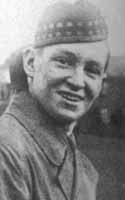
Tartan Riding Breeches (Gordon Highlanders) belonging to Capt A.D. Bell-Irving MC*
Tartan Riding Breeches (Gordon Highlanders) belonging to Capt Alan Duncan Bell-Irving, MC and bar with the label "McKimmie & Co. Edinburgh, Captain A. D. Bell-Irving MC".
Captain Bell-Irving served in the Gordon Highlanders before joining the Royal Flying Corps.
He originally enlisted in the 16th Battalion CEF in 1914 before taking his commission to the 3rd (Special Reserve) Battalion, The Gordon highlanders, Territorial Force. CEF Service File attached.
DOUBLE NUMBERED WITH 1987.046.001
Air Commodore Alan Duncan Bell-Irving began his military aviation career as a Canadian flying ace in the Royal Flying Corps during World War I. He served in the RCAF during World War II.
Bell-Irving was originally enlisted in the 3rd Battalion (Special Reserve) The Gordon Highlanders and transfered to the RFC. He was assigned as an observer/gunner. He was shot down during September 1915 but escaped unscathed. In December, he was wounded in action. After becoming a pilot, he was assigned to 60 Squadron and shot down his first enemy plane on his twenty-second birthday, 28 August 1916. He was flying a Morane for 60 Squadron when he destroyed a Roland reconnaissance plane over Bapaume. Re-equipped with a Nieuport 17, he followed up by destroying an observation balloon on 16 September and reeling off five more victories over enemy recon aircraft in the next month, bringing his total to a balloon and five planes destroyed, and one plane driven down out of control. He was shot down again on 21 October 1916, but was unhurt. Being wounded in action on 9 November 1916 removed him from combat. Bell-Irving later served at, then commanded the School of Special Flying at RAF Gosport, England.
He received his first Military Cross (MC) "For gallantry and skill in attacking a hostile balloon at 1,000 feet under heavy fire and bringing it down in flames. On a previous occasion he brought down a hostile machine."
He was awarded his second Military Cross (MC) Bar "For conspicuous gallantry in action. He displayed great courage and skill when escorting a bombing raid. He engaged several enemy machines and drove them off. Afterwards, although his own machine was damaged, he continued to fight against superior numbers of the enemy."
The Gordon Highlanders was a line infantry regiment of the British Army that existed for 113 years, from 1881 until 1994 when it was amalgamated with the Queen's Own Highlanders (Seaforth and Camerons) to form the Highlanders (Seaforth, Gordons and Camerons) which was later merged with the Royal Scots Borderers, the Royal Highland Fusiliers (Princess Margaret's Own Glasgow and Ayrshire Regiment), the Black Watch (Royal Highland Regiment) and the Argyll and Sutherland Highlanders to form the Royal Regiment of Scotland, a large regiment. The Gordon Highlanders took its name from the Clan Gordon and recruited principally from Aberdeen and the North-East of Scotland.


bottom of page