top of page

dimension
Length, in
Length, ft
Length, cm
Height, in
Height, cm
Height, ft
Weight, g
Weight, oz
Weight, lb
Detail Info
Object ID
2007.272.001
Access Number
2007.272
Subjects
Object Name
Photograph, Black & White
Other Name
Status
Material
Provenance
Location
Origin
Caption
Date
Status Date
Note
Dimension Notes
Condition Notes
FEATURE INFO
Artifact Type
Image
Image
Category
Collection
72nd BATTALION CEF, SH of C
72e BATAILLON CEF, SH de C
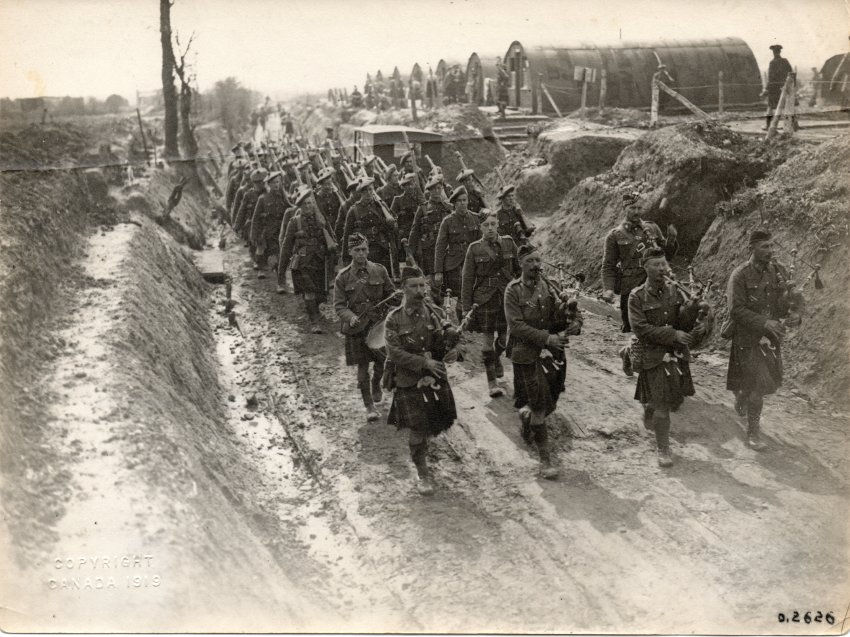
72nd Battalion Boys passing Hills Camp, Neuville St. Vaast led by pipers
SHCMA Caption: "72nd Battalion Boys passing Hills Camp, Neuville St. Vass" (sic - Neuville St. Vaast) Four pipers are leading the troops".
"72nd Bn Boys returning to camp after a route march" (Photo Guide), May 1918
Neuville-St. Vaast is a village about 6 kilometres north of Arras and 1 kilometre east of the main road from Arras to Bethune.
The War Cemetery is within the Canadian National Vimy Memorial Park, which is north of Neuville-St. Vaast. The main entrance to the Park is signposted from the Arras to Lens road (N17).
The cemetery was established by the Canadian Corps after the successful storming of Vimy Ridge on 9 April, 1917 and some of those buried in the cemetery fell in that battle or died of wounds received there, though the majority of the graves were made later for the burial of the dead recovered from surrounding battlefields and from isolated graves which were transferred into the cemetery over a period of years after the Armistice.
The Neuville-Saint-Vaast German War Cemetery was established at the end of the Great War, between 1919 and 1923, by the French authorities. The Treaty of Versailles of 1919 provided for the shared maintenance of war cemeteries and in 1922 France granted her 'ex-enemies' who fell on her soil the right in perpetuity to a grave.

bottom of page