top of page

dimension
Length, in
Length, ft
Length, cm
Height, in
Height, cm
Height, ft
Weight, g
Weight, oz
Weight, lb
Detail Info
Object ID
2017.155.002
Access Number
2017.155
Subjects
Object Name
Photograph, Black & White
Other Name
Status
Material
Provenance
Location
Origin
Caption
Date
Status Date
Note
Dimension Notes
Condition Notes
FEATURE INFO
Artifact Type
Image
Image
Category
Collection
TRAINING IN THE UNITED KINGDOM, 1939 - 1943
FORMATION AU ROYAUME-UNI, 1939-1943
Kettering, Northamptonshire showing a garage and cars on a street, 1940
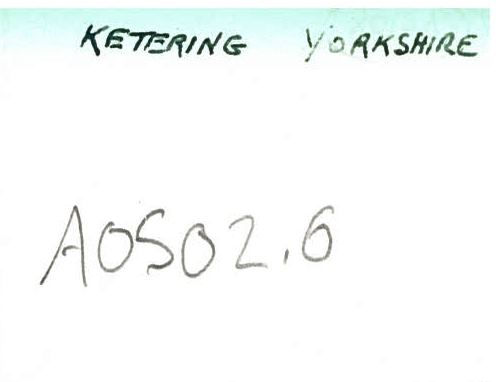
Kettering, Northamptonshire despite the rear caption stating: "Ketering, Yorkshire". The photo shows a garage and cars on a street, 1940.
From the Regimental History, pages 88, 89:
On 30 May 1940, the Seaforths reached Kettering, about 13 miles northwest of Northampton [130 km north of London] and went into billets. An officer in charge of the advance party wrote: "The inhabitants were most hospitable-in fact running into the street offering to take in soldiers." Another wrote "The people of Kettering were very kind to all ranks, in fact over generous particularly in the preparation of tea and cakes which appeared almost as soon as the vehicles stopped." In a remarkably short time the Seaforths, along with the rest of the brigade, was settled in billets and Brigade Headquarters was set up at Burdyke House in nearby Weekly. It was soon realized that the entire division had moved into the Northampton area.
In this new location, the Canadians formed part of G.H.Q. Home Forces reserves. Its role was to reinforce the troops on the east coast of England between the north bank of the Thames and the south bank of the Humber in case of attack. For the next few days the Seaforths were fairly busy. The billets were exceptionally comfortable- too much so, perhaps, because in a few days the unit was ordered to move to Boughton Park, the 5,000-acre estate of the Duke of Buccleugh only a few miles from Kettering.
However, the battalion had to get under canvas, dig slit trenches in case of air attack, and prepare to move at the shortest possible moment. Each morning between 0330 and 0430 hours the men had to "stand-to" in case of parachutist attack, and another "stand-to" was held at dusk.
The period of uncertainty at Boughton Park came to an end on 6 June 1940 when the unit was ordered to move south to Aldershot's Morval Barracks.
Excerpt attached to Media


bottom of page