Urban combat skills on display during Ex HIGHLAND BLITZ
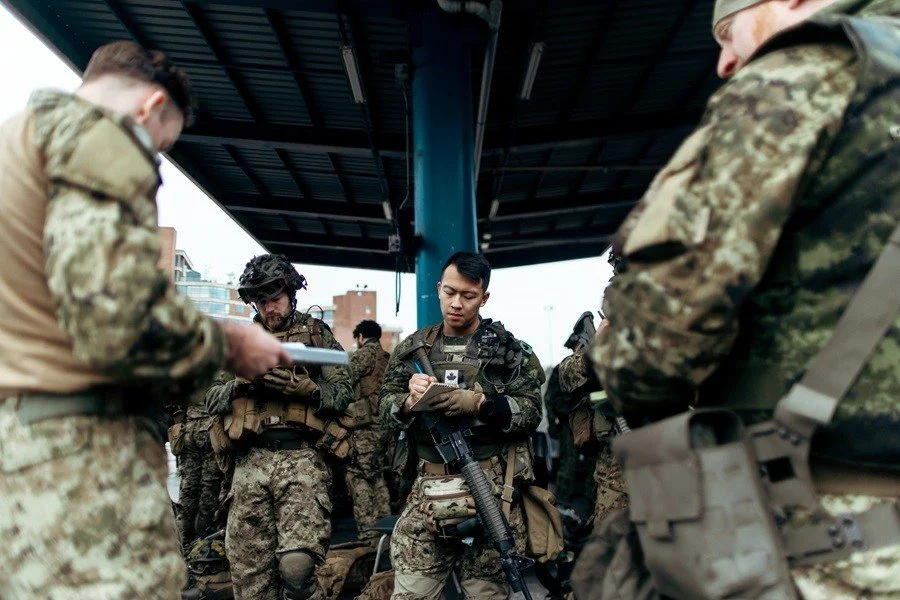
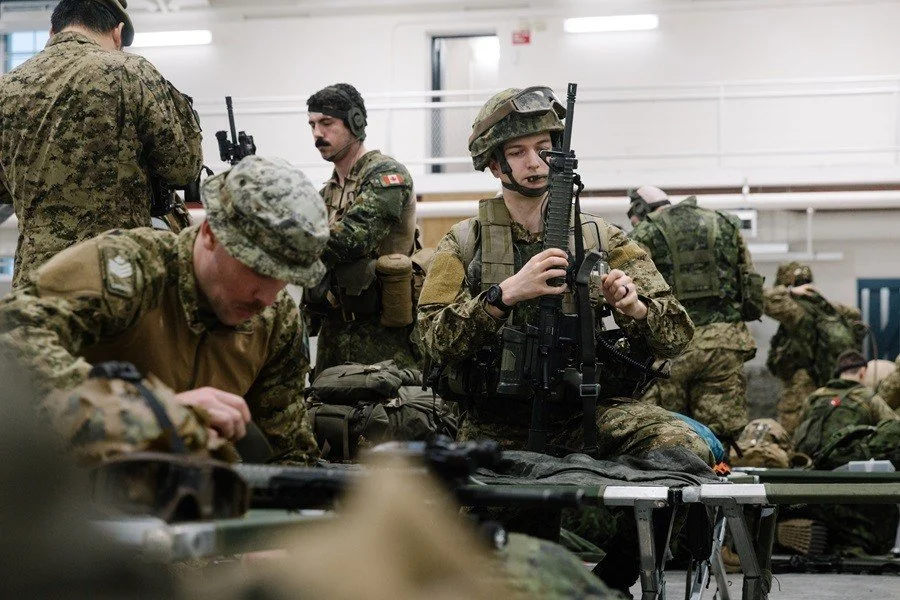
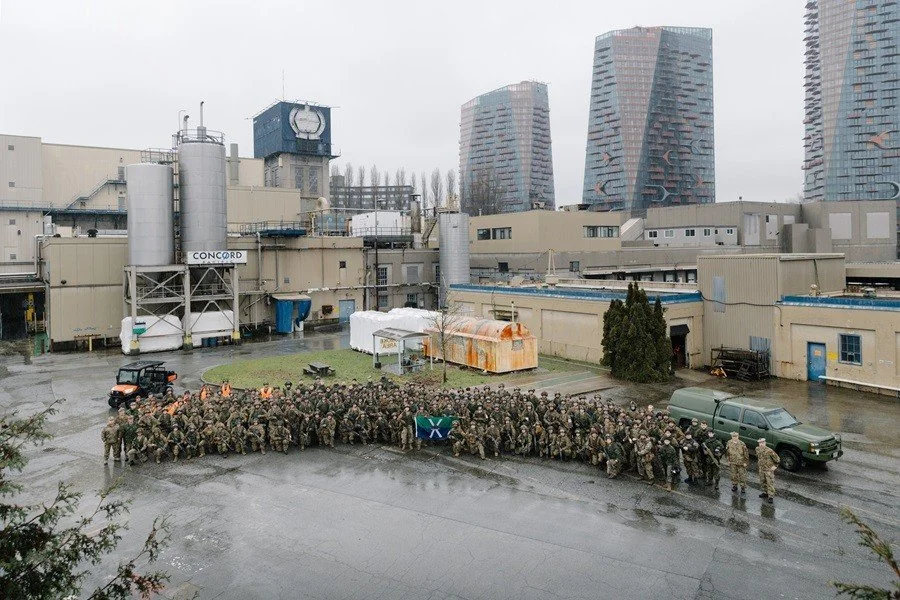
The weekend of Jan. 30 to Feb. 1 saw nearly 200 soldiers from the Army Reserves sharpen their combat skills in a demanding urban environment during Exercise HIGHLAND BLITZ in Vancouver, B.C.
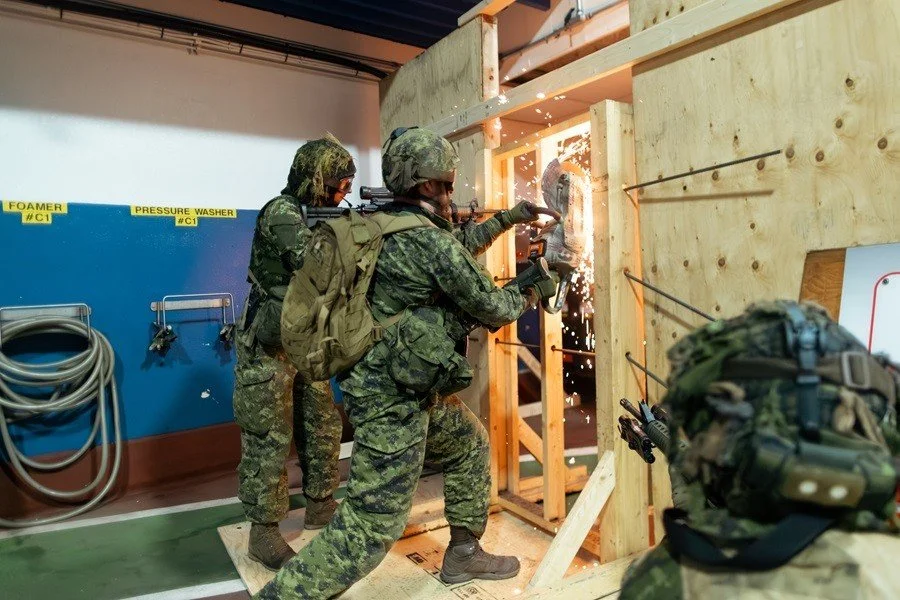
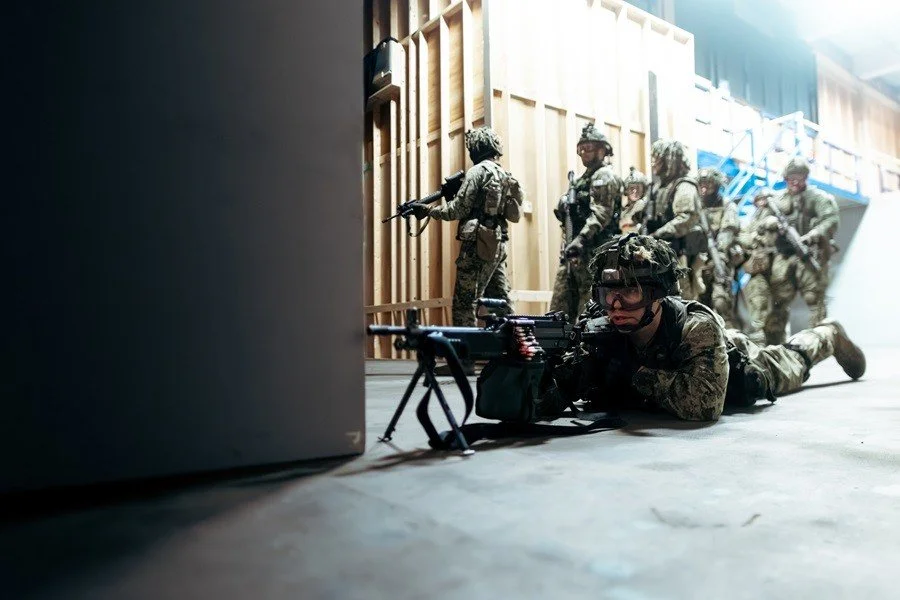
Soldiers work their way through a rebar obstacle as part of Exercise HIGHLAND BLITZ. The exercise honed the soldiers’ urban combat skills using Close Quarter Battle drills, “simunition” training systems and force‑on‑force scenarios as they made their way through the former Molson brewery in Vancouver, B.C., from Jan. 30 to Feb. 1.
Photo by Nick Del Castillo
Infantry soldiers from The Seaforth Highlanders of Canada, The Canadian Scottish Regiment (Princess Mary’s) and The Calgary Highlanders (10th Canadians) conducted company‑level offensive operations inside the former Molson Brewery, a large and unused industrial complex in the heart of the city.
The former brewery provided an ideal training venue for urban operations. Its sprawling layout of long corridors, machine rooms, catwalks, stairwells and office spaces created a complex three‑dimensional battlespace that closely replicated the challenges of modern urban combat. Soldiers were required to plan, rehearse and execute deliberate assaults, all while maintaining situational awareness in a 360‑degree environment where contact with the enemy could occur from any direction.
Supported by personnel from 39 Signal Regiment and 12 Field Ambulance, the exercise immersed soldiers in a realistic tactical setting that tested their skills in room clearing, tactical movement, communication, and command and control. The maze‑like structure forced sections and platoons to co‑ordinate closely, emphasizing disciplined movement, clear communication, and adherence to battle drills under pressure.
To increase realism, soldiers were equipped with ‘simunition’ training systems, firing non‑lethal marking rounds. This allowed troops to experience the stress and consequences of close combat decision‑making while safely validating tactics, techniques and procedures. With a full company‑sized force consisting of four platoons, combat support skills played a critical role in mission success. Pioneer personnel were tasked with breaching reinforced doors, rebar obstacles and chain‑link barricades, enabling the assault force to maintain momentum.
Casualty care and evacuation were fully integrated into the exercise. Simulated casualties were identified using casualty cards describing specific wounds, requiring section members and combat medics to assess, treat, and evacuate casualties under tactical conditions. Casualties were moved to designated Casualty Collection Points, where medics provided treatment in preparation for evacuation, reinforcing the importance of medical support in sustained urban operations.
Ex HIGHLAND BLITZ also reflected the Canadian Army’s ongoing modernization and renewed focus on land power in response to contemporary conflict. Recent global events have reinforced a fundamental truth of warfare: despite advances in technology, sensors and long‑range systems, the outcomes of war are still decided by soldiers on the ground. You cannot seize, hold or defend terrain from the air or sea alone—these tasks require trained, equipped and determined land forces operating in close contact with the enemy.
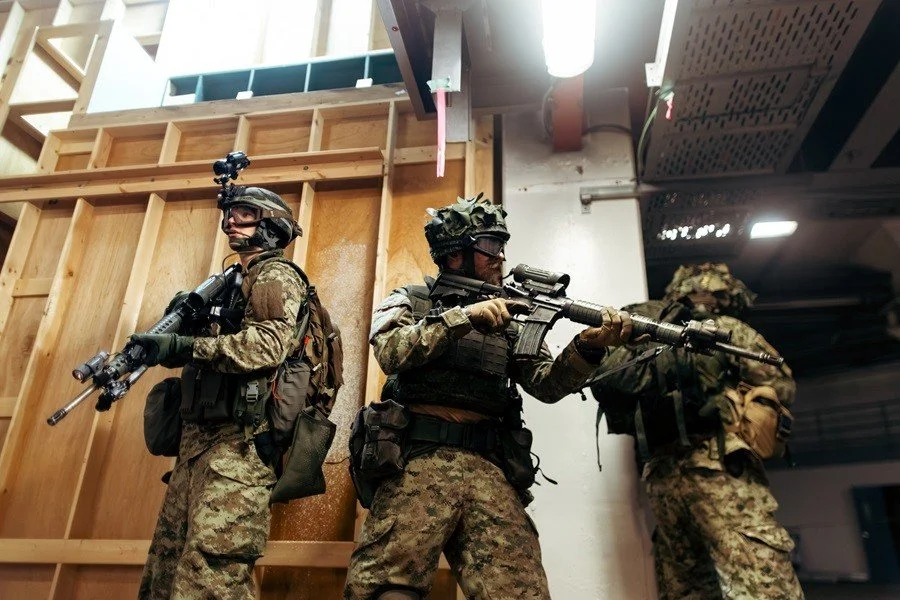
Soldiers make their way through the old Molson brewery in Vancouver, B.C., while participating in Exercise HIGHLAND BLITZ during the weekend of Jan. 30 to Feb. 1.
Photo by Nick Del Castillo
Urban environments in particular have emerged as decisive terrain in modern conflict, demanding adaptable, resilient soldiers capable of fighting in all weather, across all terrain, and under intense pressure. Exercises like HIGHLAND BLITZ ensure Army Reserve soldiers remain a credible and versatile capability, able to integrate modern communications, medical support and combined‑arms enablers while operating in complex environments. As Canada’s most flexible and cost‑effective instrument for security, deterrence and defence, land forces provide the Government of Canada with tangible options across the spectrum of operations.
A distinctive aspect of Ex HIGHLAND BLITZ was the celebration of the shared Highland heritage of the participating infantry regiments. Each traces its lineage to Highland units that served with distinction during the First World War. This heritage was highlighted during the exercise, most notably when the sound of bagpipes echoed through the brewery as the company deployed for a night attack – linking modern training with historic regimental traditions.
Ex HIGHLAND BLITZ reinforced the importance of realistic, collective training in preparing Army Reserve soldiers for the complexities of contemporary operations. By combining demanding terrain, integrated combat support, modernized training approaches and strong regimental identity, the exercise strengthened operational effectiveness, unit cohesion and the Army’s ability to deliver credible land power in defence of Canada and its interests.